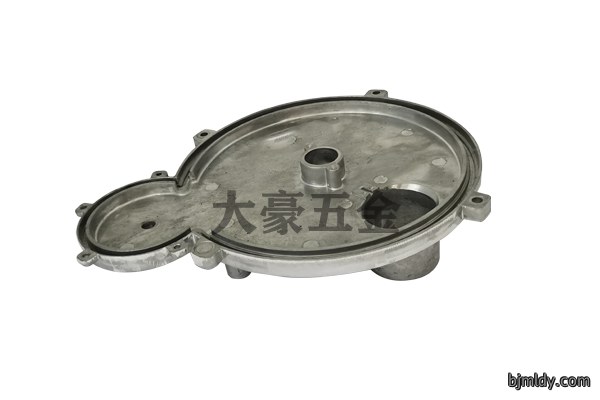
With the continuous improvement of the development level of the domestic manufacturing equipment industry over recent decades, the equipment level and technical specifications of the die casting machine have also been substantially elevated through iterative engineering refinements and manufacturing process innovations, the types of parts that can be manufactured through die casting methodologies are also constantly expanding to encompass applications across automotive components, consumer electronics housings, industrial machinery brackets, telecommunications infrastructure elements, and medical device casings, the dimensional accura
The shrinkage defects commonly observed in die-cast aluminum parts typically manifest in specific geometric zones characterized by particular thermal and structural conditions, notably within the thick sections located at the root of the flying riser positioned adjacent to the inner runner system, as well as in wall thickness transitions and expansive flat surface areas where thin walls are present, all of which represent regions prone
Considering the cost of procurement, die-cast aluminum parts that meet the specifications will lose a lot of competitiveness in the cost competition after long-distance transportation and expensive import tariffs. In the context of competition, the tendency to localized procurement is not only a vigorous cultivation of local standby procurement resources, but also a circumvention scheme to the procurement wind test.
Die casting aluminum casting process represents a comprehensive methodology designed to address the technical challenge of aluminum slag recovery and utilization within manufacturing operations. The system encompasses multiple sequential stages beginning with the smelting of aluminum raw materials, where aluminum die casting manufacturers implement specialized protocols incorporating the strategic addition of slagging agents and refining agents during the smelting phase to optimize metal quality and slag composition. The foundational process workflow involves the thermal processing of hot aluminum slag, which undergoes controlled transfer through closed thermal insulation transfer boxes that preserve temperature integrity and prevent heat loss during conveyance to designated hoppers. Subsequently, mechanical elevator systems facilitate the upward transport of hot aluminum slag material, which is then introduced at an oblique angle into high temperature pots where continuous stirring action promotes thermal distribution and separation efficiency.