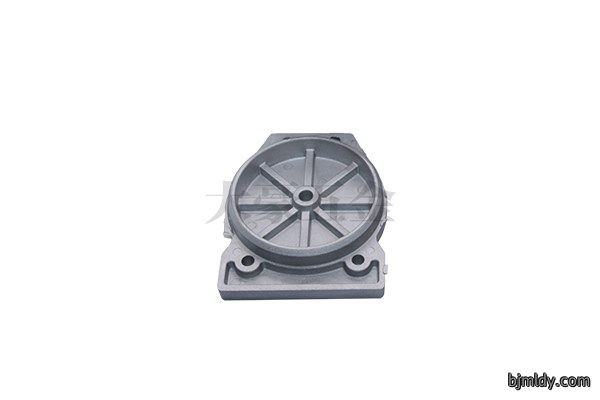
Flat cover refers to the head or cover plate characterized by a flat surface of the shell structure, functioning as a critical pressure-containing component in vessel design and manufacturing. When employed as the upper head of a pressure vessel, it is designated as a flat head, while its application at the bottom of such equipment results in the nomenclature of flat bottom. The geometric configurations available for flat covers encompass round shapes, oval geometries, oblong dimensions, and rectangular patterns, each selected based on specific operational requirements and spatial constraints of the installation environment. During operational conditions when the vessel is subjected to internal or external pressure loading, the bending stress becomes predominantly concentrated within the flat cover area itself, creating significant mechanical strain across this structural component.
The advantages inherent to this design approach encompass a straightforward structural configuration that facilitates streamlined manufacturing processes and reduces production complexity across fabrication workflows. The disadvantages, conversely, present notable constraints in that the mechanical properties exhibit limitations under stress conditions, the material consumption rates tend toward inefficiency resulting in larger overall dimensions and increased weight, and the structural bulk may complicate installation logistics in confined spaces.
The control of die casting mold surface temperature is very important for the production of high-quality die casting parts. Uneven or inappropriate mold temperature will also lead to casting size instability, ejecting casting deformation during the production process, resulting in thermal pressure, sticky mold, surface depression, internal shrinkage holes and hot bubbles and other defects. When the mold temperature difference is large, it has different degrees of influence on the variables in the production cycle, such as filling time, cooling time and spraying time.